Our Research Projects

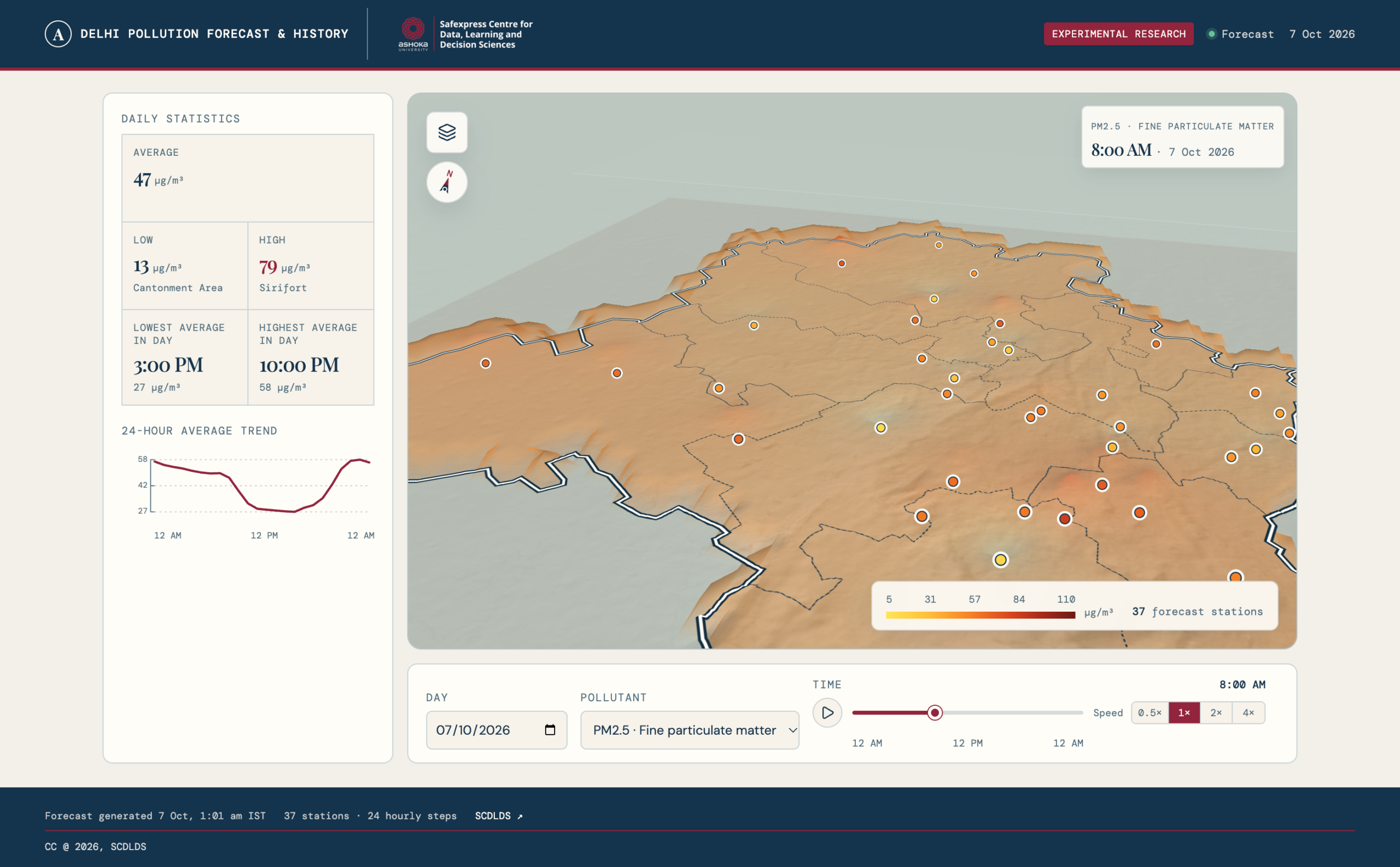
Delhi Pollution Forecast & History

We have engineered AirCast Delhi and AirCast-SR, a diffusion-based foundation model utilizing Latent Consistency Diffusion to downscale coarse global weather predictions (~28 km) into kilometer-scale, high-resolution local forecasts. By fine-tuning atmospheric super-resolution models on sparse weather station observations across India, the platform bridges the critical gap in fine-scale weather data, enabling actionable decision-making for urban infrastructure, local heatwaves, and extreme rainfall events across Delhi and surrounding regions.


S2S Research · Experimental Subseasonal Forecast

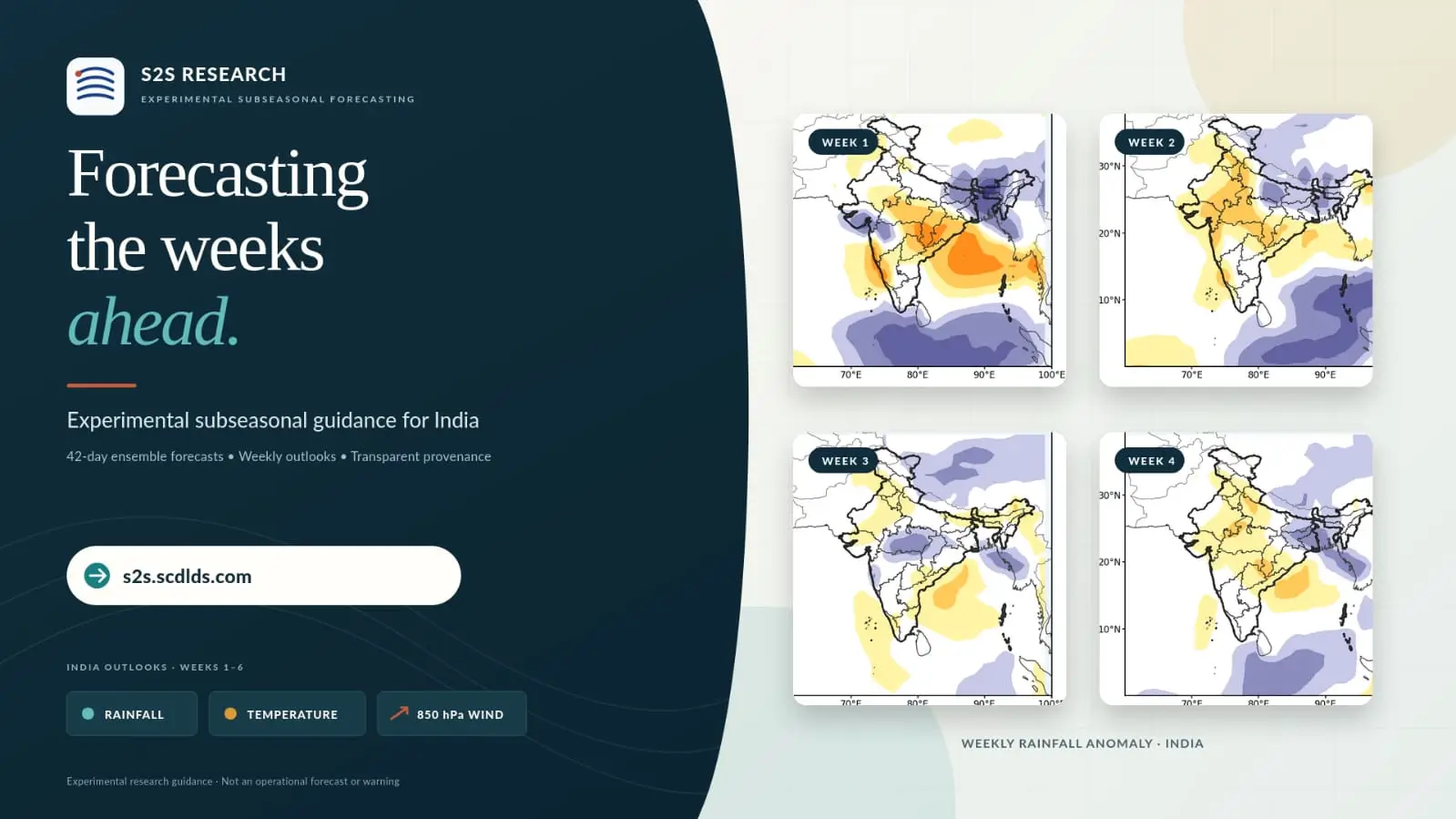
We have created a website that shows sub-seasonal to seasonal forecast looking ahead six weeks. This is based on global weather models that are fine tuned and optimized to give better predictions.


Financial Factor Data Library

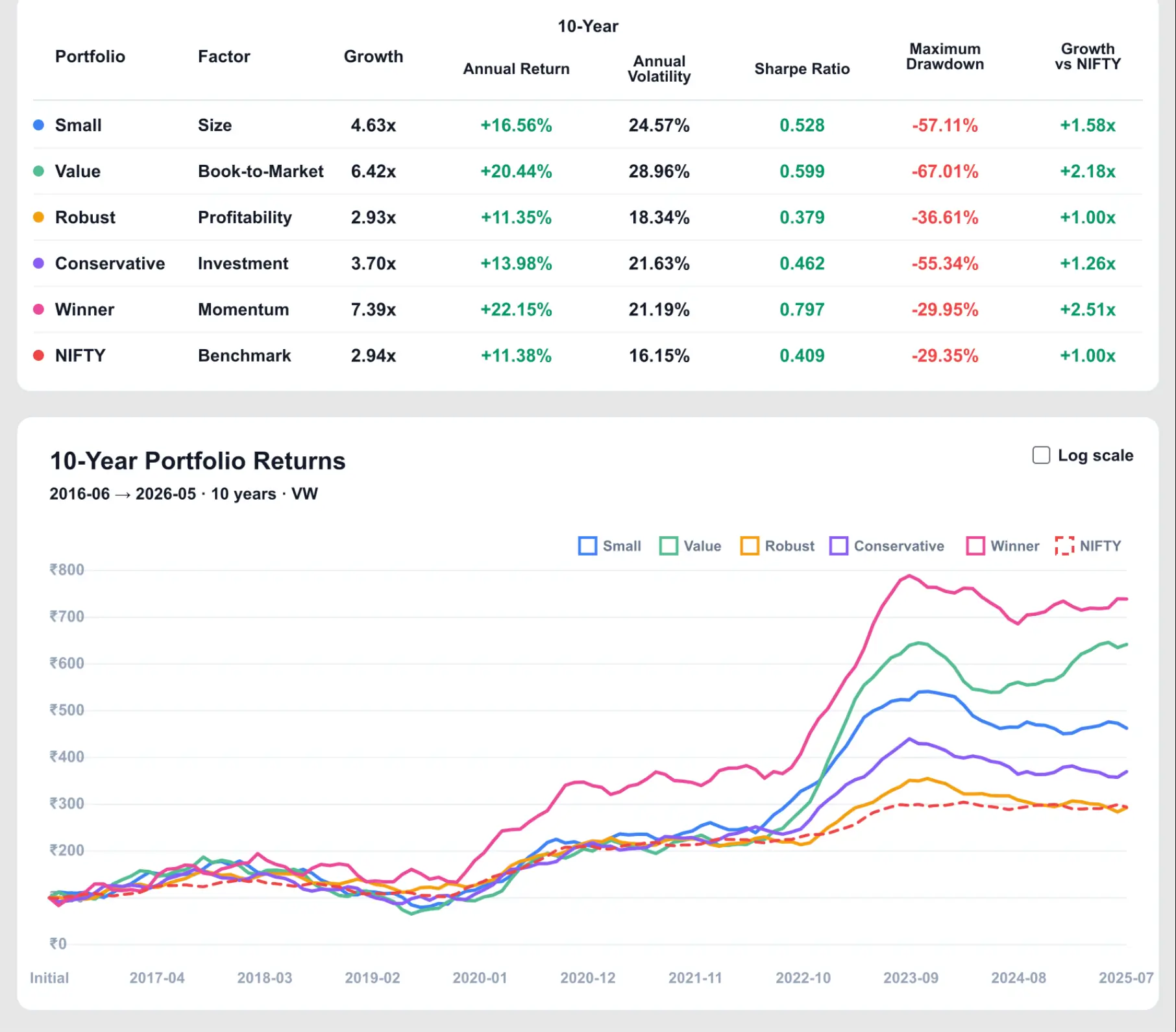
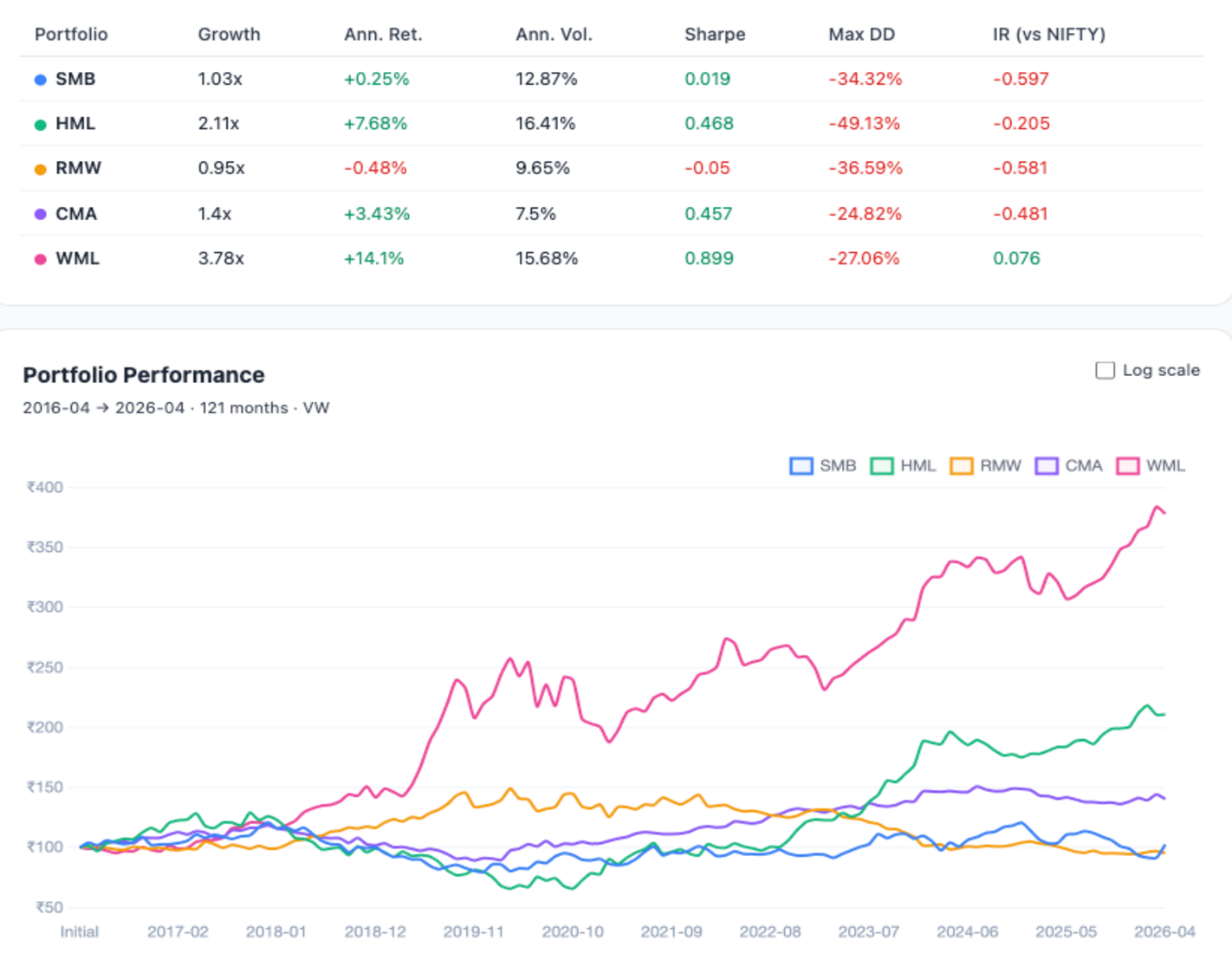
The website provides Fama-French factors for Indian equity markets along with an interactive tool visualization, analysis, and backtesting portfolio strategies. We currently cover the six core Fama-French factors: size, value, profitability, investment, and momentum starting in October 2003. We start with all stocks in the CMIE Prowess database and apply filters to screen out thinly traded stocks, penny stocks, and microcaps. This is the final SCDLDS universe that we use to compute monthly portfolio and factor returns. We will augment the return time series on a monthly basis and add other factors from time to time.


Agentic AI & ML Applications in Indian Equity Markets and Corporate Governance

Factor investing has been a prominent investment strategy for fund managers across the globe and has gained popularity in India as well. However, applying global factor construction methodology directly to India can be misleading due to the microstructure of the Indian equity market. They are characterised by a vast majority of small and illiquid firms which are often harder to trade. To address this, we propose a rigorous and empirically grounded approach for factor construction for India. The methodology incorporates liquidity, penny stocks, microcaps, accounting lags, and negative book equity filters to arrive at the tradable universe.
A central objective is to provide a transparent platform for researchers and practitioners to study the behaviour of Indian equity factors across time. This allows users to compare standard factor models across various metrics. The broader research agenda uses these factors to study factor pricing errors and portfolio optimisation using machine learning. We apply Hansen-Jagannathan distance to evaluate how well candidate factor models explain the cross-section of returns and show that our factor construction minimizes the mispricing error as compared to other factor libraries. We also use machine-learning methods for portfolio optimization by using these factors and test the performance against various loss functions.

Agentic AI framework for Proxy advising in India

Shareholder voting is one of the primary mechanisms through which investors influence corporate decision-making and hold company management accountable. Institutional investors, particularly mutual funds, are required to vote on a wide range of resolutions and as the number and complexity of these resolutions have increased, evaluating each proposal has become a significant challenge. This has led to the emergence of proxy advisory firms, which analyze
corporate resolutions and provide recommendations to institutional investors. These recommendations play an important role in the proxy voting process by reducing information costs and helping investors make informed decisions, while also raising important questions about the extent of their influence on shareholder voting outcomes and corporate governance practices. The project studies the proxy voting ecosystem in India by examining how mutual funds
exercise their voting rights on corporate resolutions and the extent to which these recommendations influence institutional voting behavior. We analyze the degree of alignment between mutual fund votes and IiAS recommendations, investigate cases where mutual funds diverge from proxy advisor guidance, and explore the factors that drive such decisions. In addition, we also develop an AI-based voting agent that evaluates shareholder proposals and recommends an appropriate vote. Given information such as the proposal rationale, historical voting patterns of mutual funds and other features, the agent determines how a mutual fund should vote on a proposal.


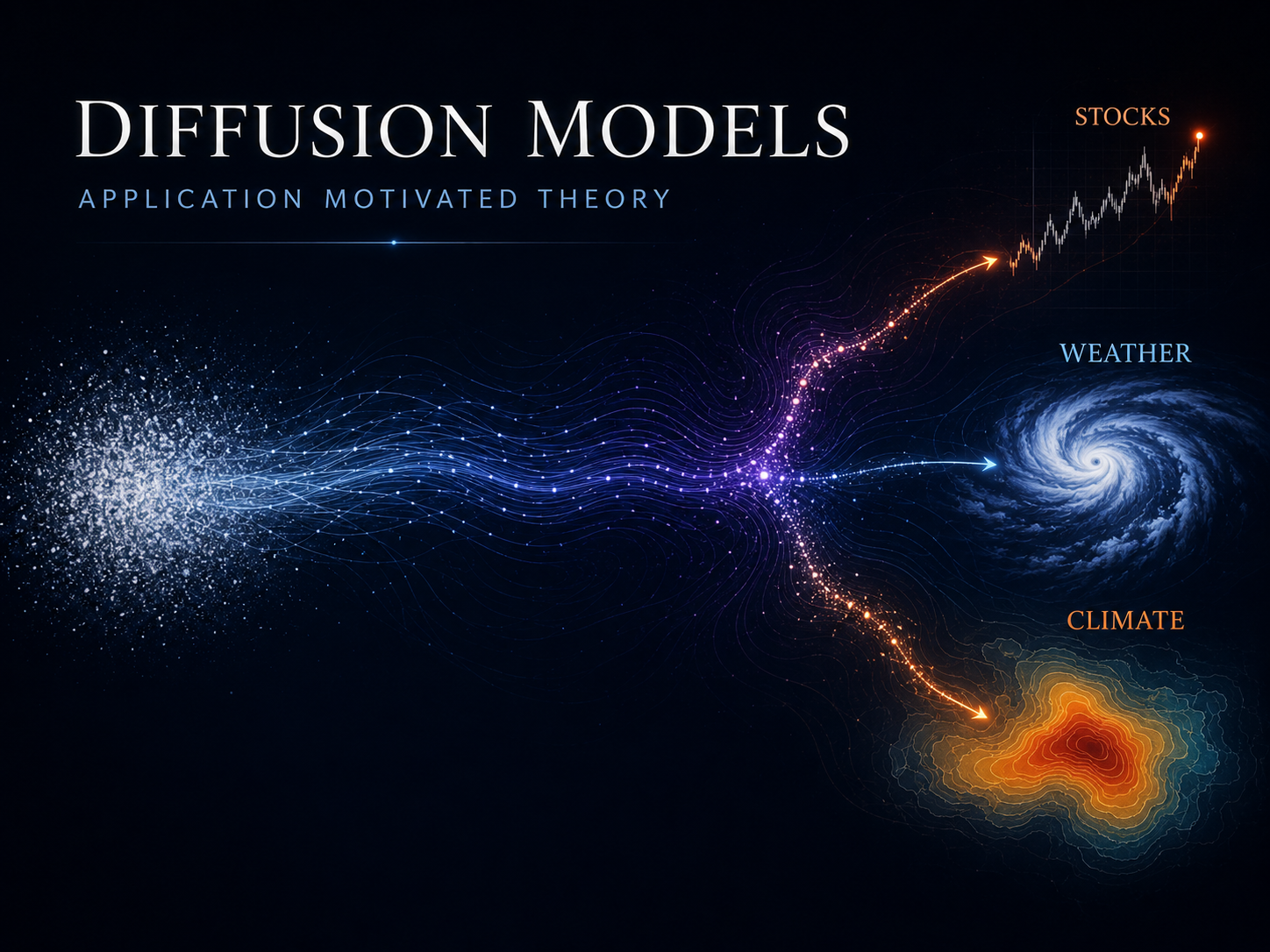
Generative AI using diffusion modelling

The diffusion group at SCDLDS seeks to explore various theoretical questions in the subfield of diffusion, which is the state-of-the-art theory employed in the best generative models around the world such as image/video generators, and recently in LLMs.


AI for weather and climate modelling

This group focuses on improving weather forecasts for India with data-driven methods to help mitigate the impacts of climate change and help various downstream applications like energy, agriculture and disaster management. We work with various agencies like the Indian Met Department to get access to relevant weather data and develop models on them.